
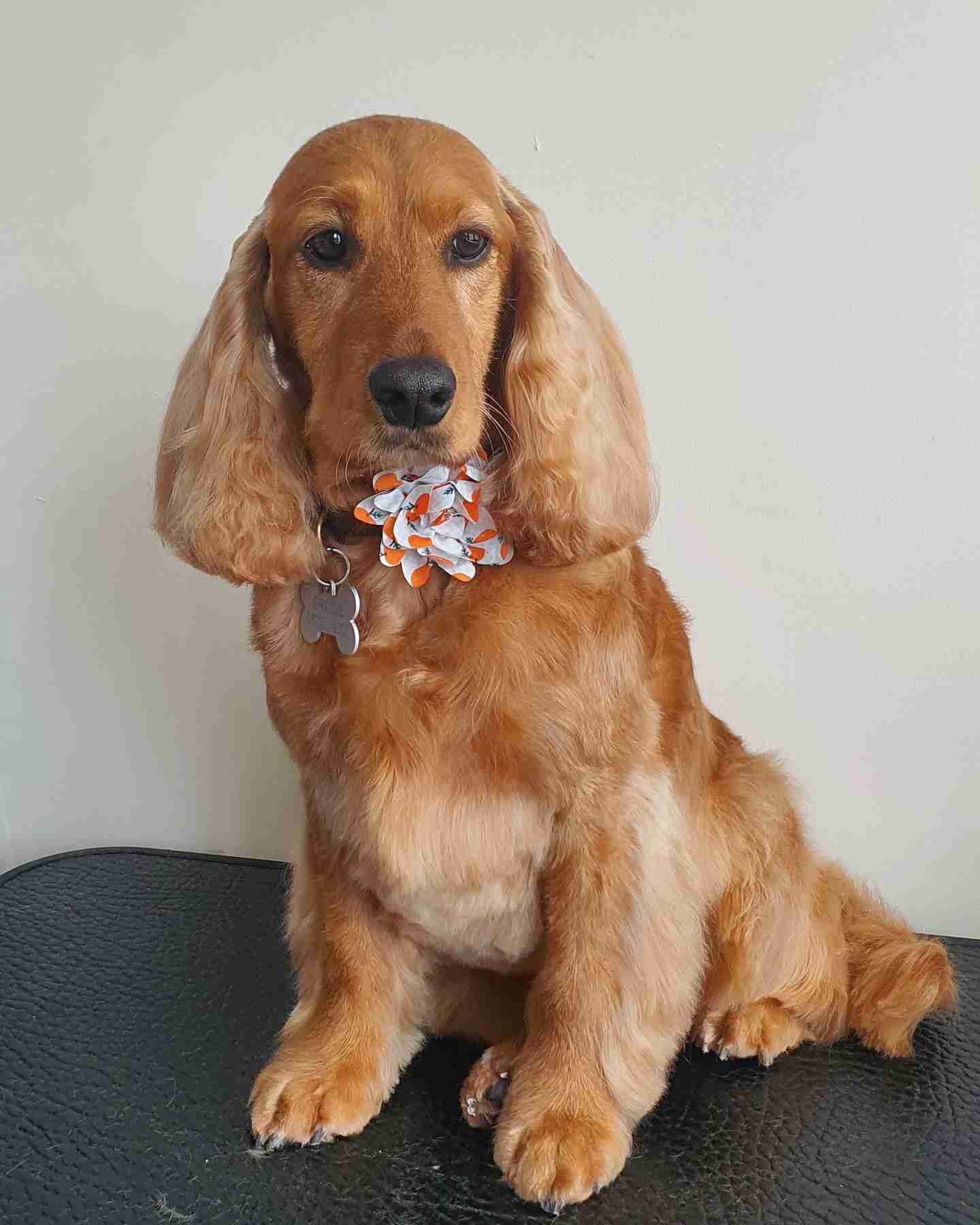

Golden Retriever Grooming Milton Keynes — Complete Owner's Guide
By Kristine — Professional dog groomer, former show dog handler, and Bernese Mountain Dog breeder. Owner of KK Dog Grooming , 30 Wharfside, Bletchley, Milton Keynes MK2 2AZ. | 07415 505151
Golden Retrievers are one of the most popular breeds in Milton Keynes, and one of the most misunderstood when it comes to grooming. Most owners know the coat is beautiful. What they sometimes underestimate is how much work that coat needs to stay healthy, comfortable, and looking the way a well-groomed Golden should look.
After 15 years of professional grooming and years as a competitive show dog handler, where I studied breed standards across dozens of breeds including Golden Retrievers, I want to give Golden Retriever owners in Milton Keynes a clear, honest guide. How often to groom, what the de-shedding question really means, what to do with the feathering, and what it costs here in Bletchley.
Understanding the Golden Retriever Coat
A Golden Retriever carries two coat layers. The outer coat consists of water-resistant guard hairs longer, slightly coarser hairs that protect the skin from moisture, UV exposure, and physical abrasion. Beneath it sits the undercoat: dense, soft, and designed to provide insulation against both cold and heat.
This double coat was specifically bred into the Golden Retriever for a purpose. The breed was developed to retrieve waterfowl in cold Scottish conditions. The outer coat repels water. The undercoat keeps the dog warm even when wet.
Together, they are an extremely effective natural system, but only when they are maintained properly.
Without regular grooming, the undercoat builds up and traps moisture, debris, and dead hair against the skin. That creates the conditions for skin irritation, hot spots, and bacterial infections,s particularly in the heavy coat zones like the chest, hindquarters, and ears.
How Often Should a Golden Retriever Be Groomed?
Most Golden Retrievers need a full professional groom every 8 to 10 weeks. That schedule covers the bath, blow-dry, full brush-out, feathering tidy, nail clip, and ear cleanse that keeps the coat in good working order.
Between professional grooms, brushing at home 3 to 4 times per week makes a significant difference. Focus on the heavy coat zones: behind the ears, the chest ruff, under the armpits, the hindquarters, and the feathering on the legs and tail. These are the areas that mat and tangle first. A slicker brush followed by a metal comb run through to the skin is the correct tool combination. If the comb does not pass through freely, there is a tangle forming that needs attention before it becomes a mat.
During the two heavy seasonal shedding periods, typically March to May and September to November,r brushing frequency should increase to daily if possible. This is when the undercoat blows out in significant volume, and home brushing has the most visible impact on household hair levels.
De-Shedding Treatment — the Most Valuable Add-On for Golden Retriever Owners
The single most impactful professional service for Golden Retriever owners is the de-shedding treatment. This is not a standard bath. It uses specialist de-shedding shampoo and conditioner that loosens the undercoat bonds during the wash, making removal far more effective than a standard shampoo. Immediately after the bath, a high-velocity blow dryer pushes the loosened undercoat out from the roots, and the visible difference is dramatic.
In the days after a de-shedding treatment, most Golden Retriever owners notice an immediate and significant reduction in household shedding. The effect is most pronounced in the first two weeks and then gradually returns to normal as new undercoat grows in. Booking a de-shedding treatment at every professional groom appointment keeps this cycle managed. During the spring and autumn blowouts, adding an extra appointment between the regular 8-week grooms provides even better control.
The Feathering — What It Is and Why It Matters
The feathering on a Golden Retriever is the longer, flowing hair that grows on the ears, chest, belly, back of the legs, and tail. It is one of the most distinctive visual features of the breed, and one of the most commonly mishandled aspects of Golden Retriever grooming.
Feathering should be trimmed and shaped, not removed. A skilled groomer uses scissor work to neaten the feathering, remove stray hairs, and shape it so it lies naturally without looking ragged or overgrown. The goal is a tidy, breed-appropriate finish that preserves the Golden's natural silhouette.
If your Golden comes home with short, choppy feathering, or no feathering at all, that is a sign of a poor groom. The same applies to the tail: a Golden's tail should have a clean, slightly fanned shape when properly groomed, not a blunt cut or an uneven finish.
Heavy feathering mats more quickly than the body coat. So between grooms, pay particular attention to the feathering on the back of the legs and ears. These sections need brushing through with a comb to the skin to catch early tangles.
Should You Shave a Golden Retriever in Summer?
This question comes up every summer, and the answer is always the same: no.
The logic behind shaving seems sound: less coat equals cooler dog. But it does not work that way for double-coated breeds. The Golden Retriever's outer guard coat does not trap heat, it reflects it. The coat also provides crucial UV protection for the skin underneath. Remove the guard coat and the dog becomes more vulnerable to overheating and sunburn, not less.
Beyond the immediate welfare issue, shaving a Golden Retriever often causes permanent coat damage. The guard coat and the undercoat grow at different rates. After shaving, they can come back at the wrong rate relative to each other, causing the coat to grow back with a different texture, patchy coverage, or in some cases a condition called post-clipping alopecia where sections of the coat do not regrow normally.
The correct approach for managing a heavy coat in summer is de-shedding treatment to remove the trapped undercoat — not shaving. The undercoat removal significantly reduces the insulating effect of the coat while leaving the protective guard hairs intact.
Never shave a Golden Retriever. De-shedding treatment removes the excess undercoat without damaging the guard coat, UV protection, or temperature regulation the breed needs. |
Golden Retriever Ears — a Common Problem Area
Golden Retrievers have heavy, floppy ears that trap moisture and restrict airflow. That combination makes them particularly prone to ear infections. A groomer who takes ear health seriously checks and cleans the ears at every appointment, not just occasionally.
At home, check your Golden's ears weekly. A healthy ear is clean, pale pink, and odourless. A dark discharge, a persistent yeasty or unpleasant smell, or your dog scratching and shaking their head regularly are all signs of a developing infection that needs a vet visit rather than a home clean.
At KK Dog Grooming, every appointment includes an ear check and clean. Kristine flags any ear concerns to the owner at collection so they can act before an infection develops.
FAQs — Golden Retriever Grooming Milton Keynes
Every 8 to 10 weeks for a full professional groom. Between grooms, brush 3 to 4 times per week. During seasonal shedding in spring and autumn, brush daily and consider adding an extra de-shedding appointment.
At KK Dog Grooming in Bletchley, a full groom starts from £60 (short coat) and from £80 for longer or heavier coats. De-shedding add-on: £10. Maintenance bath: £60 for large breeds.
No. Shaving removes the protective guard coat and can permanently damage the coat structure. De-shedding treatment is the correct approach — it removes the trapped undercoat without touching the guard hairs.
Book your Golden Retriever's groom with Kristine at KK Dog Grooming
Dog grooming in Milton Keynes should be stress-free — for your dog and for you. At KK Dog Grooming in Bletchley, you book with confidence knowing exactly who handles your dog, what to expect, and what it costs before you walk through the door.
Call or WhatsApp Kristine on 07415 505151, email kkpetstyling@gmail.com, or use the online booking page. Appointments available Monday to Friday, 10:00–18:00, at 30 Wharfside, Fenny Stratford, Bletchley, MK2 2AZ.
First time booking? Call for a quick chat first. Kristine is happy to answer questions about your dog's breed, coat, or temperament before you commit — because the right groomer and the right dog should be a good match from the very first appointment.